
Bogor, SINAR-BERITA.com|* The threat of global food crisis and the increasing poverty rate as a result of various challenges such as the Cocid-19 pandemic, climate change, natural disasters, and conflicts, demands further commitment from ASEAN member states to work together in building regional food security and nutrition.
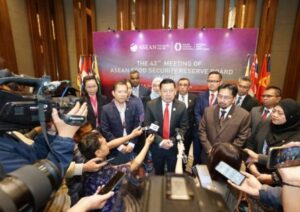
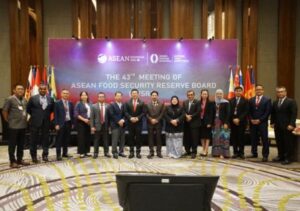
This was highlighted by the Head of the National Food Agency (NFA), Arief Prasetyo Adi, during his opening remarks at the 43rd ASEAN Food Security Reserve Board (AFSRB) Meeting on Wednesday (7/6/2023) in Bogor.
“We need to take concrete actions to address the global food crisis, including the risks and unprecedented shocks to the food system. Therefore, it is important to ensure stability in food availability, accessibility, and utilization in the region,” he stated in front of the delegates from ASEAN Member States, ASEAN Secretariat, AFSRB Secretariat, APTERR Secretariat, and AFSIS Secretariat.
Indonesia’s Chairmanship in ASEAN this year takes on the theme of ASEAN Matters: Epicentrum of Growth. This signifies Indonesia’s role in leading ASEAN to actively contribute to peace and prosperity in the region and the world, as well as maintaining ASEAN as the center of economic growth. This aligns with President Joko Widodo’s statement during the opening of the 42nd ASEAN Summit in Labuan Bajo, where he emphasized the need for ASEAN to strengthen economic integration, enhance inclusive cooperation, and solidify the architecture of health, food, energy, and financial stability.
Therefore, Arief stated that one of the deliverables of Indonesia’s Chairmanship is to ensure food security and nutrition in the region. “I believe that one way for ASEAN to respond to the dynamics of food security and nutrition is by strengthening the commitment of ASEAN member countries through the adoption of ASEAN Leaders’ Declaration on Strengthening Food Security and Nutrition in Response to Crises,” he said.
This declaration is an effort to synergize the roles of all relevant sectoral bodies in ASEAN, including agriculture, trade, finance, and transportation, in strengthening food security and nutrition in the region. The Declaration is being discussed in the AFSRB meeting and will be endorsed by ASEAN Leaders at the 43rd ASEAN Summit in September 2023.
Furthermore, Arief conveyed that the National Food Agency, as the government agency responsible for food, plays a crucial role in ensuring food security and nutrition. In this regard, the National Food Agency develops food reserve and distribution systems, stabilizes food supply and prices, alleviates food-insecure areas, diversifies food consumption, and formulates and controls food safety standards.
“The National Food Agency does not work alone; we build synergy and collaboration, cooperate with relevant ministries/institutions, state-owned enterprises, private sector, universities, NGOs, food associations, and farmers, including building synergy with stakeholders from the international community,” expressed Arief.
The ASEAN Food Security Reserve Board (AFSRB) is a working group under the ASEAN Ministers on Agriculture and Forestry (AMAF). AFSRB was established to review, monitor and evaluate the situation of food security status at the global, regional and national level. In accomplishing those tasks, AFSRB is assisted by ASEAN Food Security Information System (AFSIS) and ASEAN Plus Three Emergency Rice Reserve (APTERR) through the systematic collection, analysis and dissemination of food security related information and other supportive activities. [*/pr]